

 |
 |
Court overturns approval of dicamba herbicide in the U.S.
Last week, a U.S. court overturned the registration of the herbicide dicamba, because of the “enormous and unprecedented” damage to neighbouring crops from pesticide drift. The decision is a major blow to the biggest seed and agrochemical companies in the world.
The court ruling means that three dicamba formulations - sold by Monsanto (Bayer), BASF, and Corteva (Dow-Dupont) - are now illegal in the U.S., and their associated genetically engineered (genetically modified or GM) dicamba-tolerant seeds are irrelevant. However, the U.S. Environmental Protection Agency (EPA) - the regulator responsible for allowing registration - has responded by allowing U.S. farmers to use up their existing stocks of dicamba.
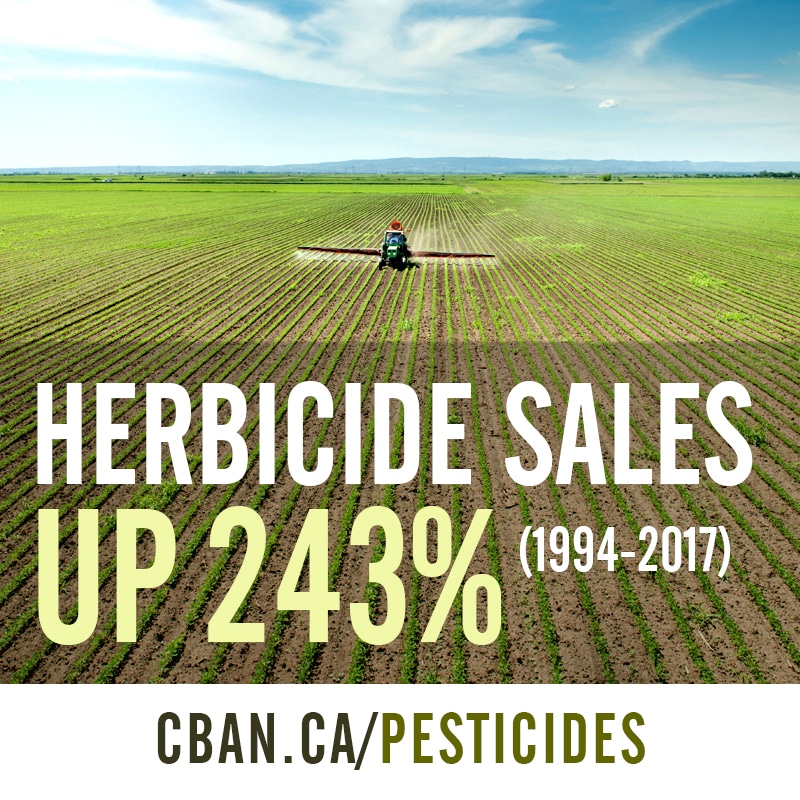 Over 50% of the soy grown in eastern Canada is now dicamba-tolerant (tolerant to both dicamba and glyphosate).
CBAN’s latest calculations show that herbicide sales in Canada have gone up by 243% since the introduction of GM crops (1994-2017).
Almost all of the GM crops grown in Canada (primarily canola, corn, soy and sugar beet) are genetically engineered to be herbicide-tolerant. Most of these GM crops are tolerant to the herbicide glyphosate, but overuse has led to glyphosate-tolerant weeds which the herbicide can no longer control. In response, companies are selling GM crops that are tolerant to other herbicides like dicamba and 2,4-D. For example, Monsanto is asking the Canadian Food Inspection Agency to approve MON 87429, a GM corn that is tolerant to dicamba, 2,4-D, glufosinate, and a group of herbicides called ACCase inhibitors.
The judges in the recent U.S. decision said that:
- When the U.S. EPA allowed registration of dicamba, it ignored evidence that it would cause widespread crop damage.
- The EPA failed to recognize “the enormous social cost to farming communities where use of dicamba herbicides had turned farmer against farmer, and neighbor against neighbor” and the risk that the use of dicamba would “tear the social fabric of farming communities.”
- The EPA did not recognize the potential reduction in competition in the soy and cotton seed markets, as many U.S. farmers bought GM dicamba-tolerant seeds as a strategy to avoid damage from neighbouring farms. (Documents from earlier court cases show that the seed companies anticipated such “defensive planting” and described it as a “potential market opportunity.”)
The scale of the dicamba drift problem in the U.S. that impacted neighbours' crops is not mirrored in Canada where weather conditions largely limit dicamba drift. However, scientists have warned Canadian farmers to use dicamba sparingly, or not at all, in order to avoid potential drift.
Without the use of dicamba (and the accompanying GM dicamba-tolerant seeds) to combat glyphostate-resistant weeds, soybean farmers in the U.S. could shift to using more 2,4-D (with GM 2,4-D-tolerant seeds). The U.S. Department of Agriculture had already projected that the approval of GM 2,4-D-tolerant soy and corn in the U.S. could increase the amount of 2,4-D used, from 26 million pounds to as much as 176 million pounds by 2020.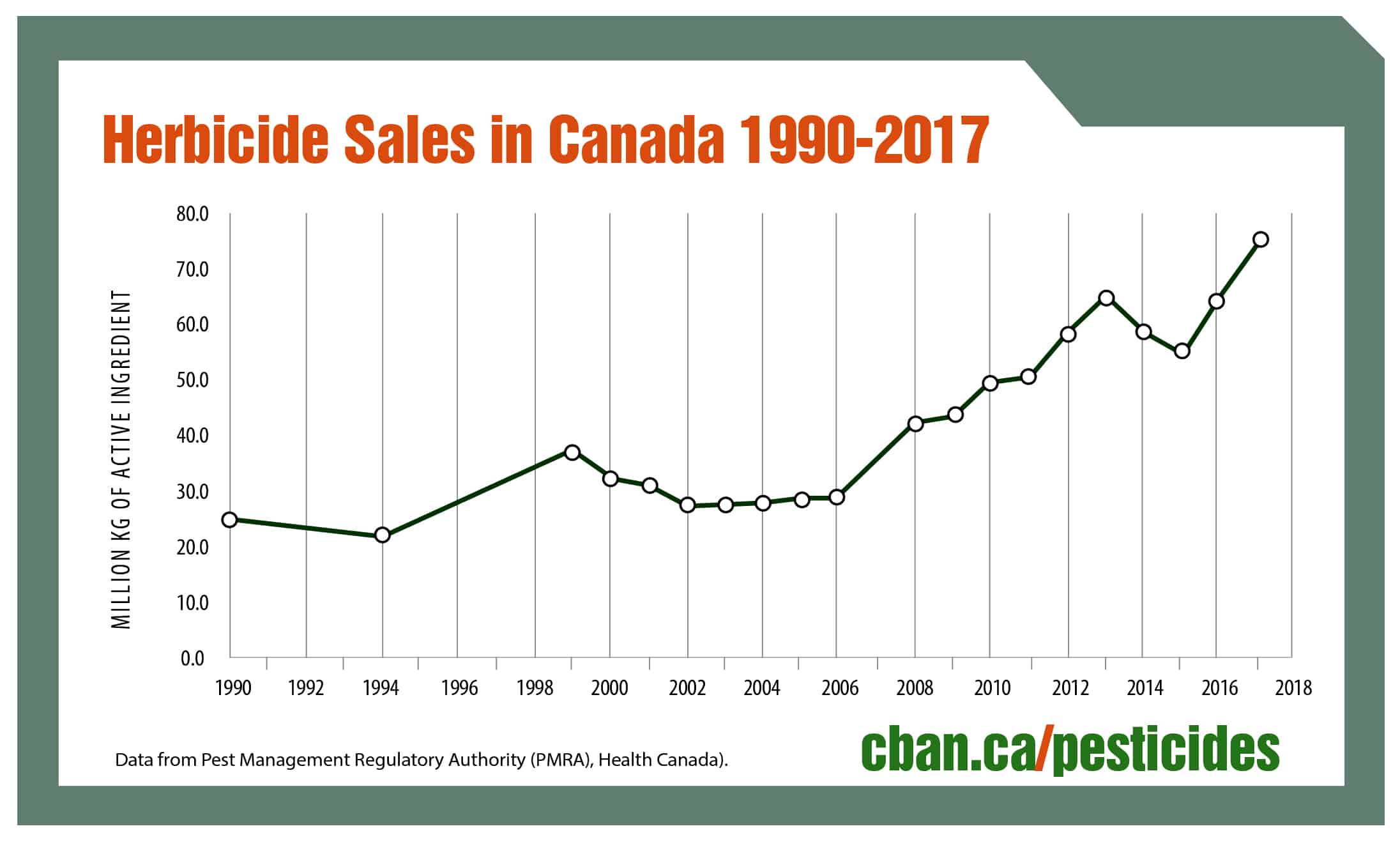


The Canadian Biotechnology Action Network (CBAN) brings together 16 organizations to research, monitor and raise awareness about issues relating to genetic engineering in food and farming. CBAN members include farmer associations, environmental and social justice organizations, and regional coalitions of grassroots groups. CBAN is a project on Tides Canada’s shared platform.