Protect Our Produce
Companies are testing consumer and farmer acceptance to launch new genetically engineered (genetically modified or GM) fruits and vegetables; some made with the new genetic engineering techniques of gene editing.
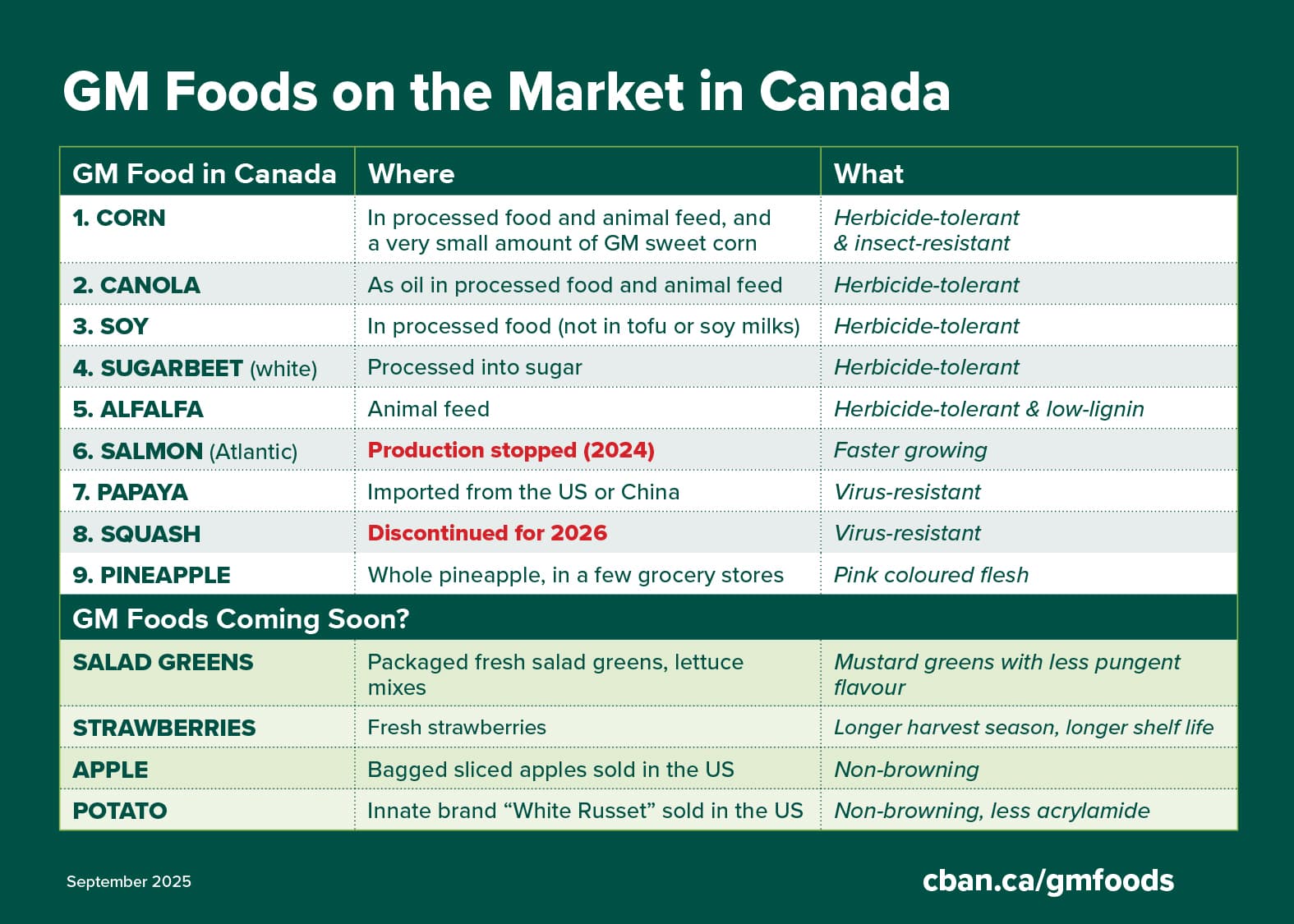
There are only three genetically modified fruits and vegetables currently on the market in Canada, with a very marginal presence in grocery stores: GM sweet corn, GM papaya, and GM pink pineapple. Until now, genetic engineering in our diets has been dominated by processed food ingredients from GM corn, GM canola, GM soy and GM sugar beet, but this could start to change.
If customers and farmers do not take action now, there are a number of genetically modified fruits and vegetables that could soon be released into our food system and seed supply. There are four GM products that are at immediate risk of being introduced, and small packets of GM purple tomato seeds are already available for purchase online by growers in Canada.
- GM Purple Tomato ™ from the US company Norfolk Healthy Produce (seeds are for sale online).
- GM gene-edited mustard greens from the multinational company Bayer (formerly Monsanto).*
- GM gene-edited romaine from the small US company GreenVenus.*
- GM gene-edited strawberries from the multinational company Simplot.*
* No government product approval is required. These gene-edited seeds and foods will not be assessed for safety Canada or the Canadian Food Inspection Agency. For details see cban.ca/NoExemptions
You can help Protect Our Produce and take action to advocate for a Non-GMO Produce Section in your grocery store.
On this page
Updates
December 2025: Health Canada and the Canadian Food Inspection Agency have approved a genetically modified (GM or genetically engineered) Purple Tomato™ for increased anthocyanins in the fruit. Unlike many future gene-edited GMOs that are exempt from pre-market regulation, this GM tomato was assessed for food safety by Health Canada.
- GM Product Alert: Genetically Engineered “Purple Tomato” Seeds & Fruit Approved in Canada, December 15, 2025 – Updated January 5, 2026
 December 2, 2025: E-petition 6768 for mandatory labelling of GM foods was presented in the House of Commons by Yves Perron, Member of Parliament for Berthier—Maskinongé and the Bloc Quebecois agriculture critic. The petition had 4152 signatures and was initiated by CBAN in partnership with Kids Right to Know.
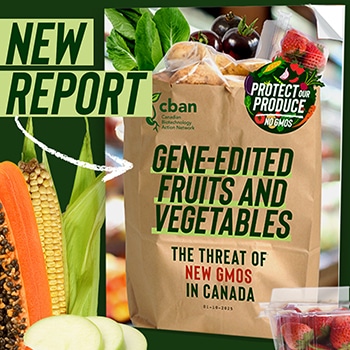
CBAN Report – October 2025: Gene-Edited Fruits and Vegetables: The Threat of New GMOs in Canada
Update – October 2025: CBAN has confirmed that GM squash, which was grown in the United States and legal to import for food since 1998, has been discontinued for 2026.
Take Action
Write to the head office of your grocery store
 Send a short email to your grocery store. Demand that your store pledges to carry only non-GMO fruits and vegetables. Tell them:
- I do not want to eat genetically modified fruits and vegetables.
- I do not want to eat GM gene-edited fruits or vegetables that can come to the market without government safety assessments.
- I want the store to commit to a non-GMO produce section to make it easy for me to choose.
Click here for the email addresses for the grocery stores.
Let CBAN know. Please tell us about your action and send us any response from your grocery store. Contact Fionna at outreach@cban.ca or 249- 532-0340
Write to your Member of Parliament
Help advocate for transparency and choice in our food system. Ask your Member of Parliament to urgently reinstate government regulation for all gene-edited foods, including mandatory labelling for all GMOs. You can look up your MP using your postal code at ourcommons.ca. For more information to take this action, see cban.ca/transparency
More Information
Biotechnology companies want to release a new flood of genetically engineered (genetically modified or GM) fruits and vegetables made with the new genetic engineering techniques of genome editing, also called gene editing. These techniques are new ways to genetically engineer plants and animals to express new traits. Tools such as CRISPR aim to delete DNA segments or otherwise change a DNA sequence. Unlike traditional plant and animal breeding, genetic engineering makes changes directly to the genetic make-up of organisms in the laboratory. Gene editing can also speed up the development of new genetically modified organisms (GMOs).
In Canada, these new GMOs can be released without government safety assessments or labelling for consumers. In 2022 and 2023, the federal government removed pre-market regulation for most gene-edited seeds and the foods from those plants, such that these new GMOs can enter the market without a government approval process and without any mandatory notification to the government or public.
- CBAN FAQ – Protect Our Produce Frequently Asked Questions
- CBAN Report – Gene-Edited Fruits and Vegetables: The Threat of New GMOs in Canada, October 1, 2025